Service Learning Blueprint (with donation)
Service Learning Blueprint (with donation)
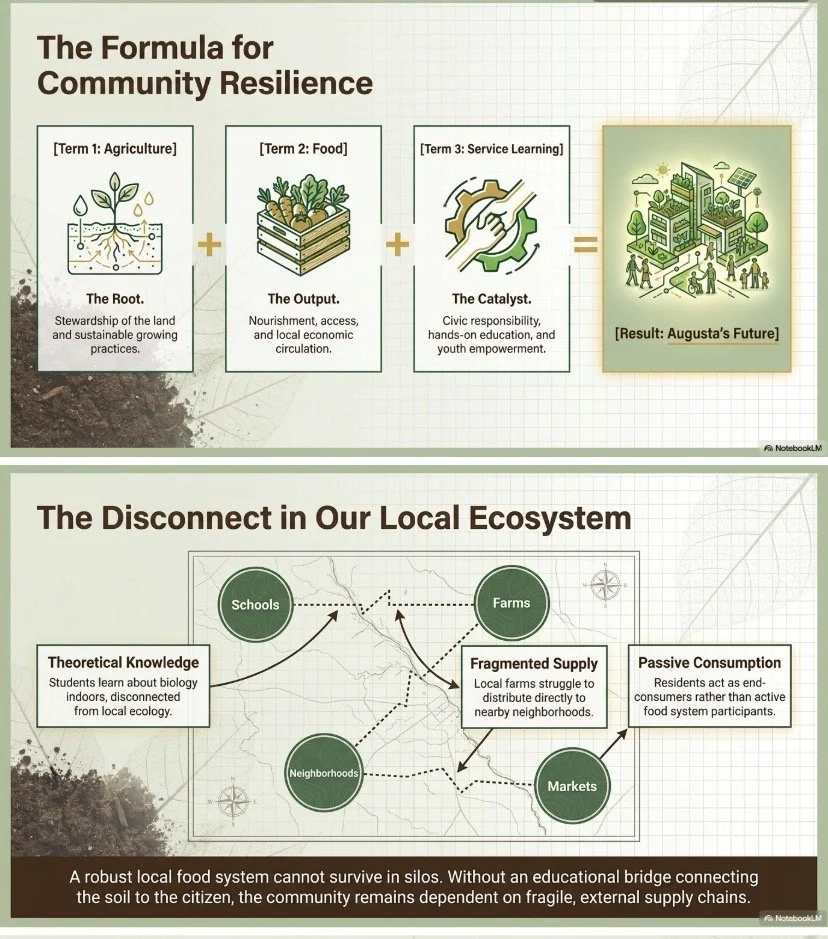
A school garden can be valuable.
But a few raised beds alone do not make a service-learning program.
The strongest model would allow students to apply what they learn to a real community need.
Students might help grow food for a community distribution project. They might develop educational materials for younger children. They could conduct a local food-access mapping project, assist growers with communications, help plan a taste test, document the history of an area farm, or support a farmers market outreach campaign.
Some students could help build planting schedules or food-safety materials. Others could create photography, video, social media, graphic design, or public information products.
A student interested in agriculture business should have a different pathway from a student interested in horticulture, nutrition, public service, engineering, communications, or culinary arts.
The project should leave room for all of them.
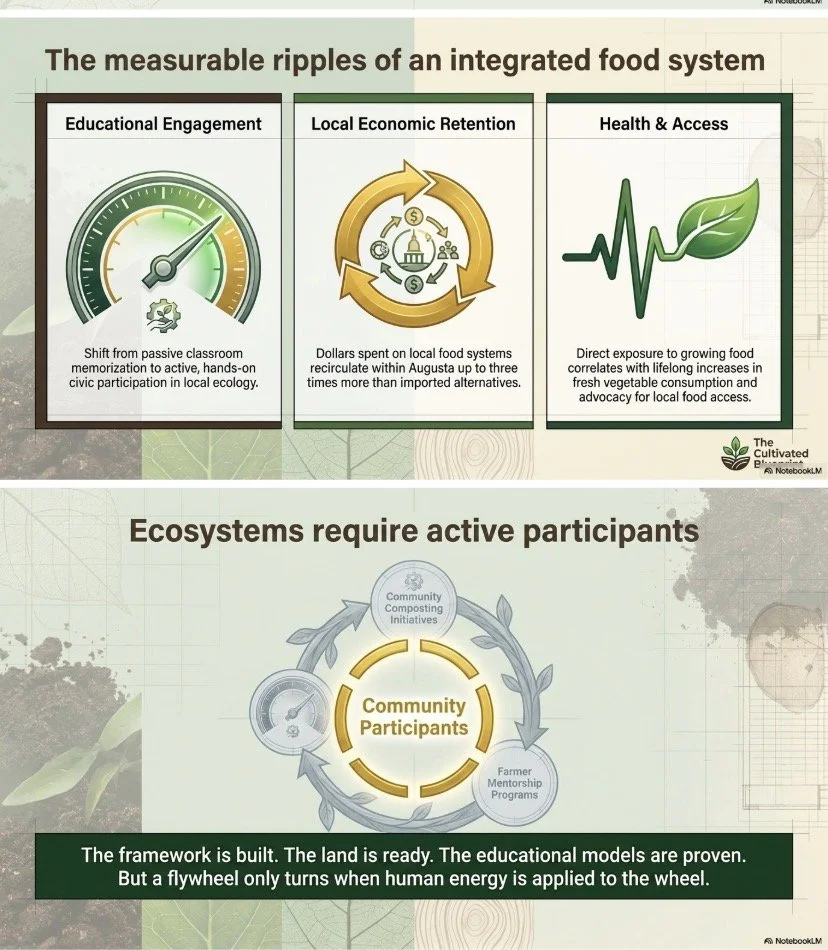
That is where service learning becomes more than volunteering. Students are learning, solving problems, working in teams, communicating with adults, practicing leadership, and seeing how their skills connect to the life of their community.